



Q5 Cyberbullying: Educate the Players
Visual Truths
Cyberbullying often feels like an invisible crime because it happens behind screens. There are no physical marks or reactions to see, so it is easy for people to pretend it isn't a big deal. To truly understand the scale of the problem, we have to look at the data. But honestly, just staring at numbers doesn't show the real feelings behind them.
Players often ignore simple text warnings about cyberbullying. Your challenge is to turn the facts into visual stories that gamers can't ignore.
As a training team, take a deeper look at the facts about cyberbullying and how you can present the data to capture players’ attention.
Check out the Impact & Data Portion of Educating the Players Module.
- Work through all six files.
- Discuss ah-has and wonders.
- You will be using some of this information in your own image.
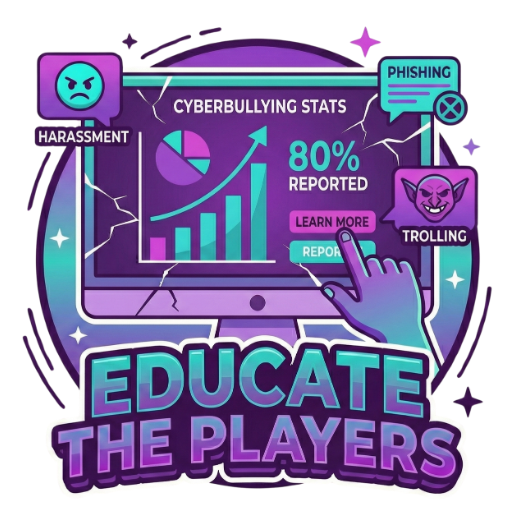
Your Objective: Design a Loading Screen Image
We need you to turn important cyberbullying facts, like the impact of harassment or the power of an upstander, into game images. A player might scroll past a sentence about bullying. Still, they won't ignore a visual Health Bar that is draining to show the percent of students who have had health issues related to cyberbullying or a shield of facts on how to block a cyberbullying attack. Your mission is to create a visual (loading screen image) that shows the damage cyberbullying causes and helps players visualize how to handle it or step in to help others.
Step 1. You will need to study the facts. Explore 6.Q5 The Facts of Cyberbullying and choose the fact that stands out to you the most.
- Turn and talk with a partner or group to share the fact you each chose and what made you choose that one.
Step 2. Check out these 6.Q5 Visual Metaphor Examples to spark some ideas.
- Think of how you could design a similar visual metaphor image to display the fact of your choice in your video game.
Step 3. Create your visual metaphor image. You will need to wait for your teacher's instructions on which design tool you are allowed to use. This could include:
- Canva
- Google Slides or Microsoft PowerPoint
- Hand-drawn and uploaded
Step 4. Add the image you create to your Player Conduct and Safety Portfolio on the Quest 5: Educate the Players slides.

Competencies & Standards
MITECS Michigan Integrated Technology Competencies for Students, and
2. Digital Citizen
a. Manage their digital identity and understand the lasting impact of their online behaviors on themselves and others and make safe, legal and ethical decisions in the digital world.
c. Safeguard their well-being by being intentional about what they do online and how much time they spend online.
d. Take action to protect their digital privacy on devices and manage their personal data and security while online.
Websites & Documents
Websites
21T4S Documents & Quizzes